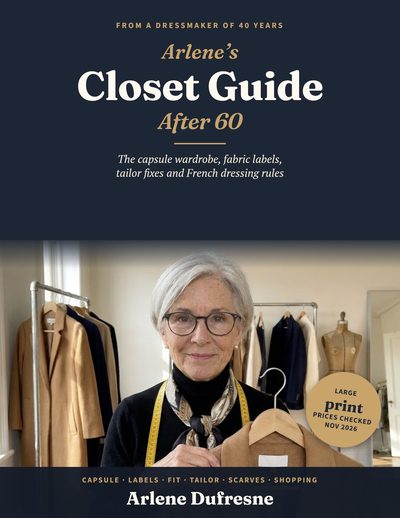
I'm Arlene. I was born in Lyon and spent forty years in America making dresses and altering clothes. This is the guide I'd hand you in my fitting room: a capsule wardrobe, how to read a fabric label, what a tailor can fix and what it costs, and the French dressing rules my mother taught me.

Digital PDF. Nothing ships.
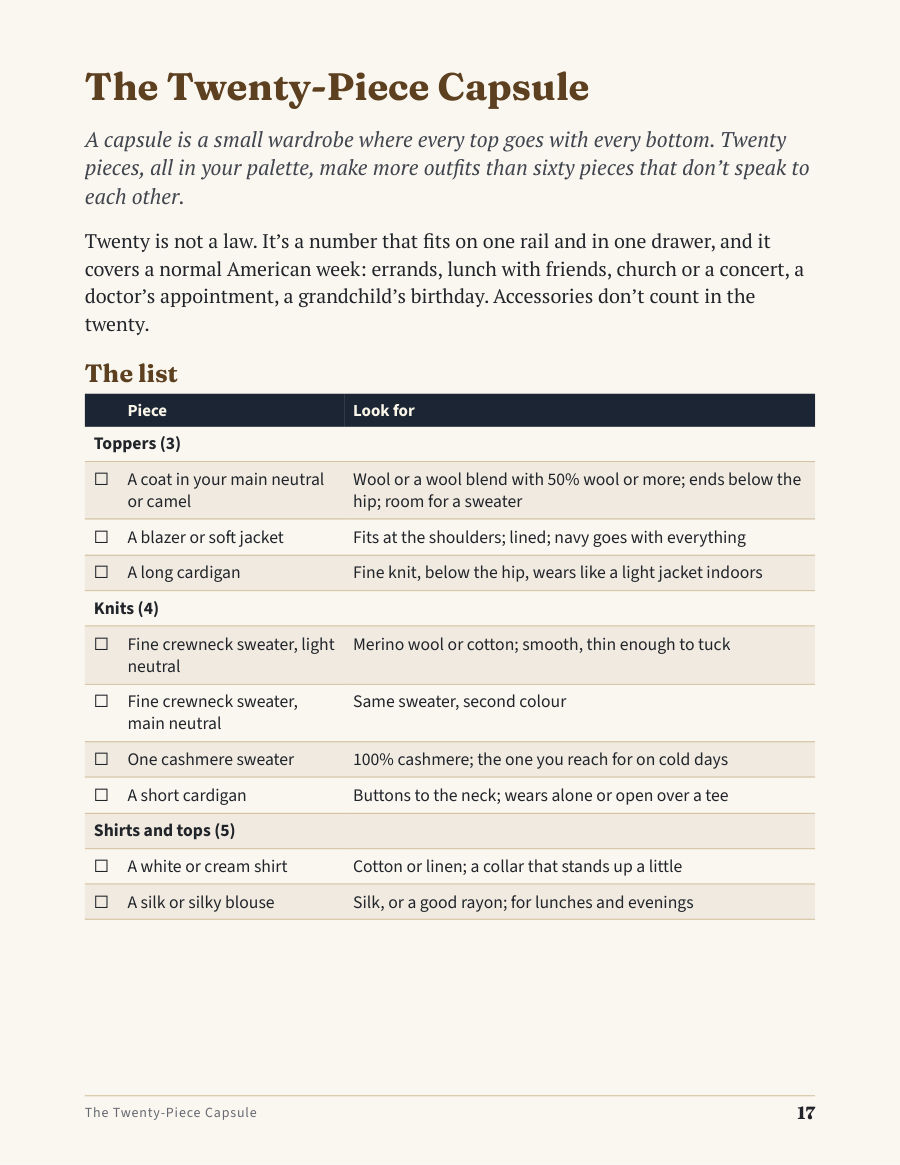
59 pages, large print. A 20-piece capsule, 20 outfits, five real fabric labels compared, published tailor prices, and a shopping list by store with prices checked in November 2026.
Available soonOpens on a phone, a tablet or a computer. Print any page. One payment, no subscription.

Forty years of altering clothes teaches you what lasts. I watched women pay more for a sweater called “cashmere” that was three percent cashmere. I watched good jackets go unworn for years because nobody shortened a sleeve for thirty dollars.
Most closets I saw were full of almost-right clothes. A smaller wardrobe that works together, the habit of reading the label, and a good tailor fixed nearly all of them.
So I wrote it down, in big type, for women over sixty: no diets, no “hide your problem areas,” no rules about what women of a certain age may wear. Just clothes that fit the body you have now, in fabric that still looks good next year.
Arlene Dufresne
Tap a page to see it full size.


59 pages in large print. A one-page summary at the front, working links in the contents, and a cheat card at the back.
Instead of reviews, here's a taste of the guide itself.
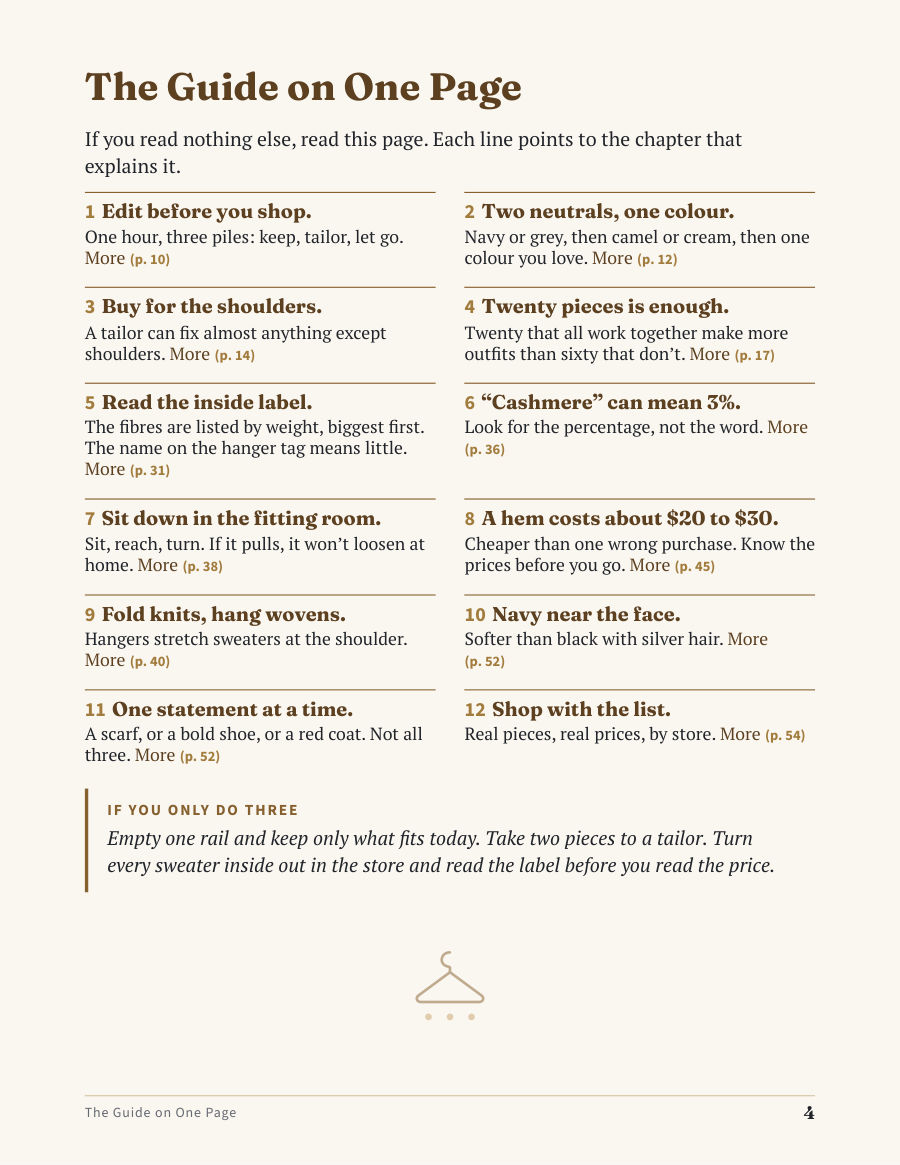
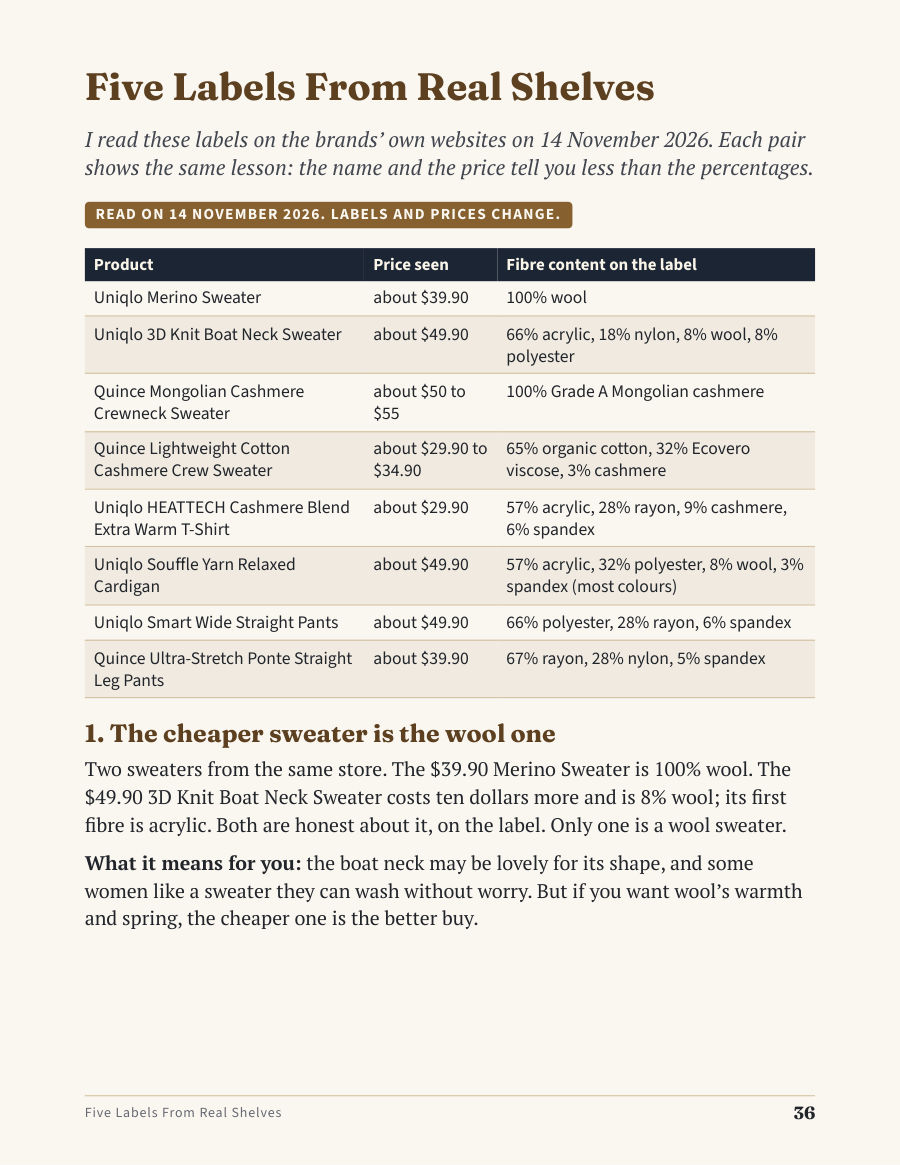
US law requires the sewn label to list fibres by weight, biggest first.
The first name tells you how it will feel, wear and wash. The hanger tag is advertising.
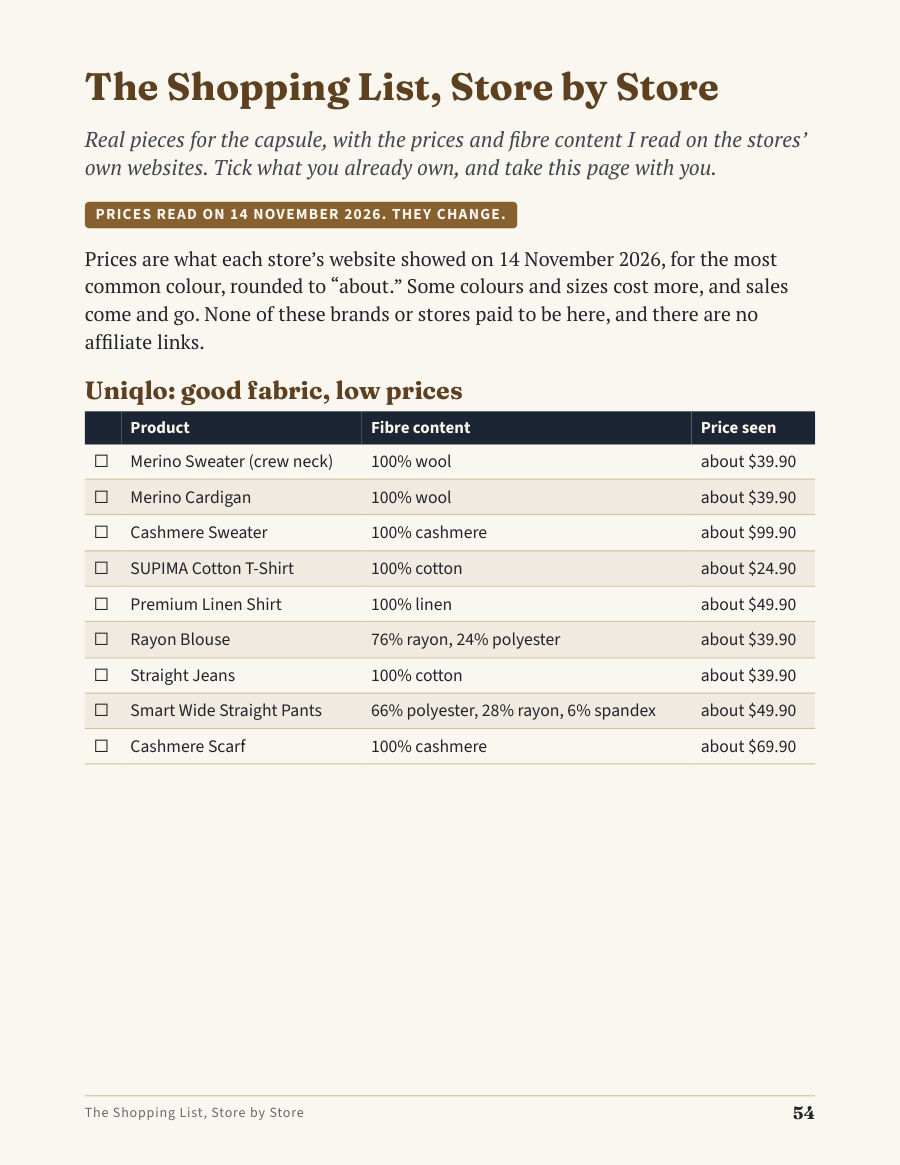
Same store, same day: a $39.90 sweater that is 100% wool, and a $49.90 one that is 8% wool, 66% acrylic.
Prices seen November 2026. They change.
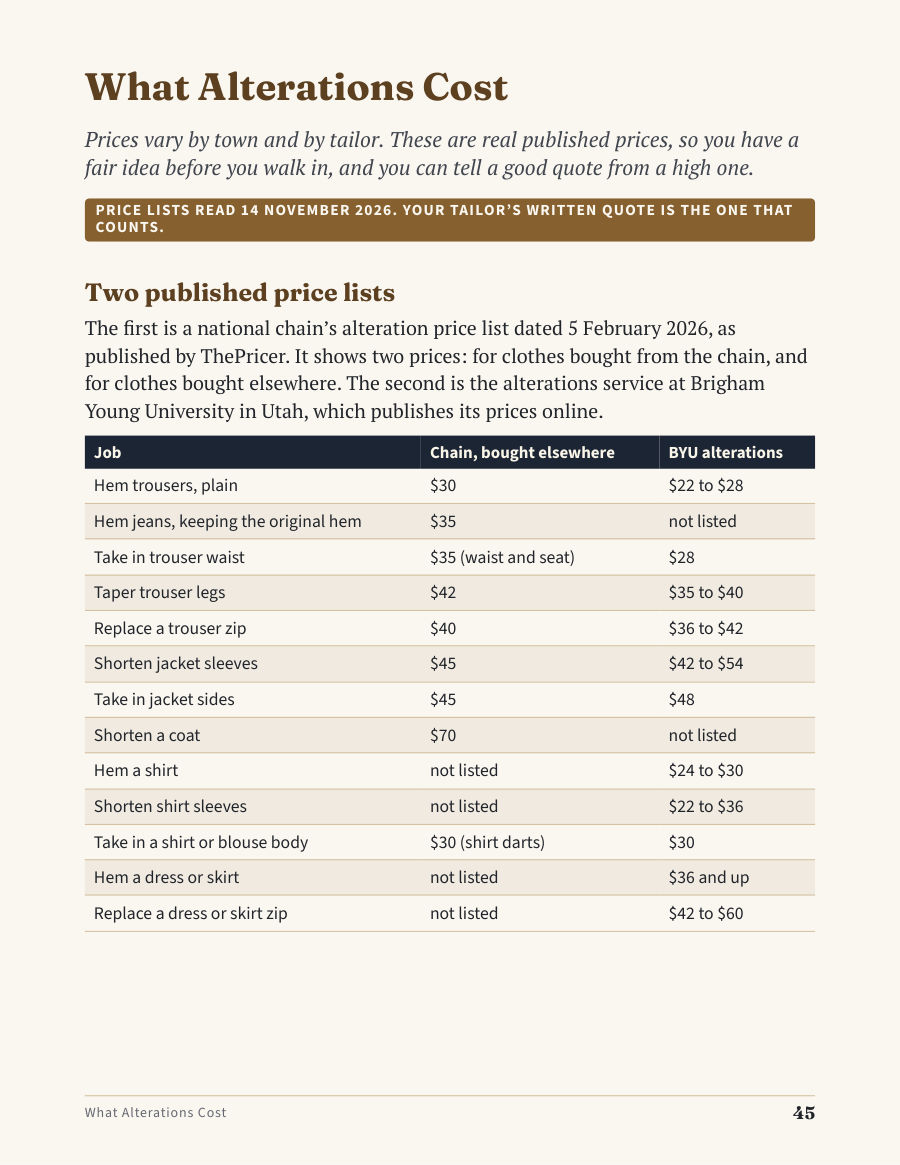
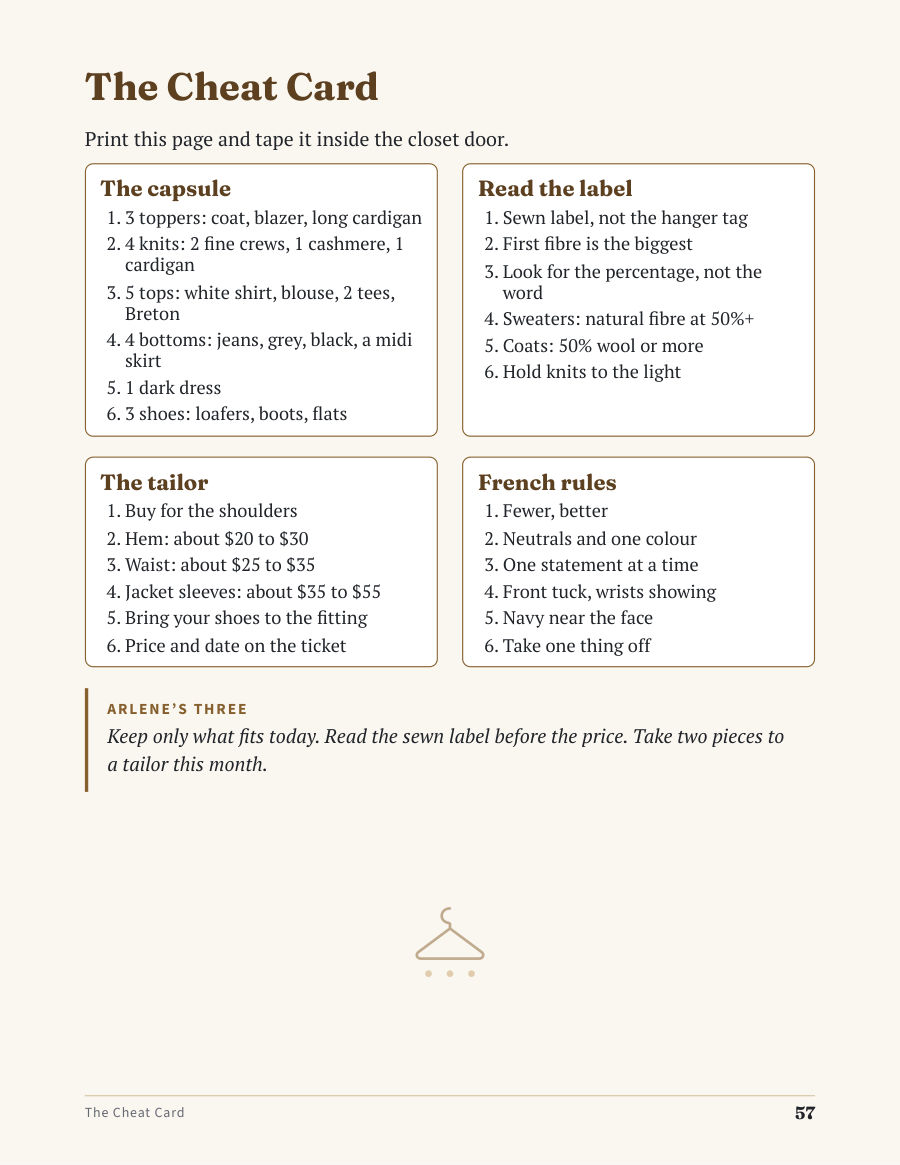
A tailor can hem trousers for about $20 to $30 and take in a waist for about $25 to $35.
Shoulders that don't fit can't really be fixed. Check them before anything else.

Digital PDF. Nothing ships.
Available soonIf it isn't what you needed, reply to your Gumroad receipt within 30 days and you get your money back. Questions go the same way.
No. It's a PDF you download. Nothing comes in the mail. You can read it on a screen or print any page at home or at the library.
Yes. The body text is set bigger than a normal book, with plenty of space between lines, and on a tablet or computer you can make it bigger still.
Yes. A PDF opens on any phone, tablet or computer without extra software. The contents page has links, so you can tap a chapter and jump to it.
No. The guide starts with your own closet. Most women find they already own half the capsule. The shopping list is for the gaps.
Every price and fibre content was read on a store's own website in November 2026, and the guide says “about.” Prices, colours and sales change.
They're published price lists, so you know a fair price when you hear one. Prices vary by town, and your tailor's written quote is the one that counts. The guide shows you how to compare two tailors in one phone call each.
No. It's an independent guide. No brand, store or tailor wrote it, paid for it or approved it, and there are no affiliate links.
No. There's no diet and no body talk in it. It's about clothes that fit the body you have now, and fabric that lasts.
Look in your email for a message from Gumroad. Search for the word Gumroad, and check the junk or spam folder too. If you have more than one email address, check the one you typed when you paid.
The link in that email takes you back to your file at any time, on any device.
Reply to your Gumroad receipt within 30 days and you get your money back. Questions and refunds are both handled through that receipt.
Find the little label in the side seam and read the first fibre. The guide shows you what to look for, what to keep, and what a tailor can fix.
Digital PDF. $27, one payment.